
How Do You Get Experience When Nobody Wants to Hire You Without It?
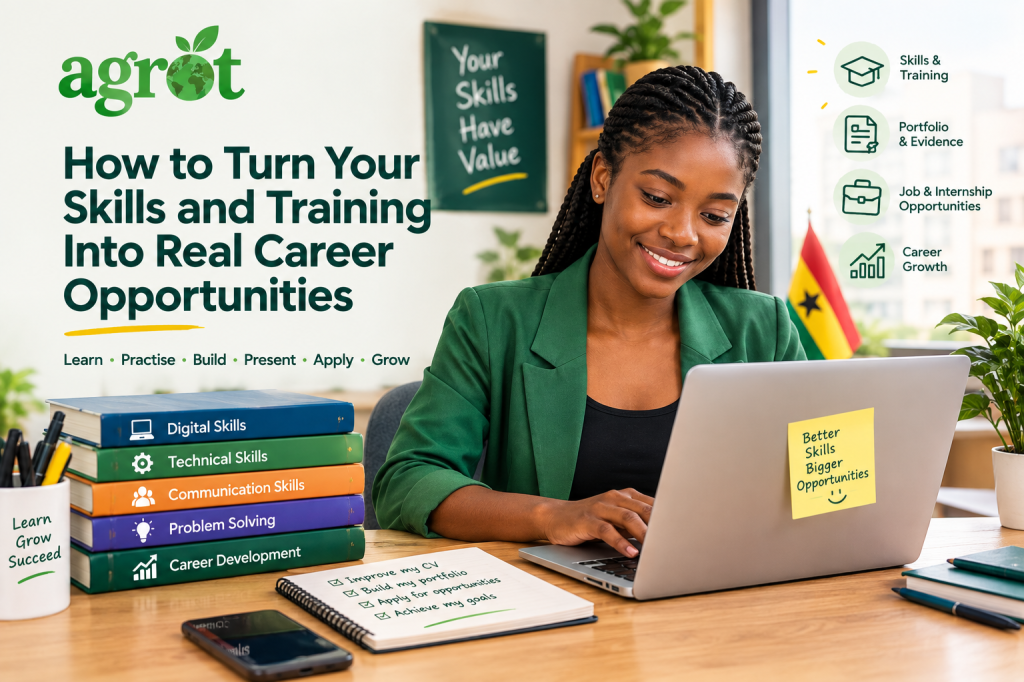
You have completed your education, learned a practical skill, or finished a training programme. You are ready to work, but there is one problem: most of the opportunities you find require previous work experience.
You check job advertisements and see requirements such as one to three years of experience. You consider applying for internships, but some also expect previous experience. You want to demonstrate what you can do, yet you have not had the chance to prove yourself in a professional environment. This situation is familiar to many young people, recent graduates, and career starters in Ghana.
However, you do not have to wait for a formal job before you can begin building relevant experience. Depending on your field, you can develop practical experience through personal projects, internships, apprenticeships, freelance assignments, community initiatives, and other activities that allow you to apply your skills.
The goal is to build evidence that you can perform relevant tasks, solve problems, learn from feedback, and contribute to a team or organisation.
In this guide, you will learn how to gain work experience with no experience, where to start in Ghana, and how to present what you have done when applying for future opportunities.
Understand What Counts as Work Experience
One reason people struggle to gain experience is that they assume it only comes from a permanent, full-time job. Formal employment is one way to gain experience, but it is not the only one.
Depending on the role and employer, relevant experience may also come from:
- Internships and apprenticeships
- Freelance projects
- Personal projects
- Academic assignments
- Volunteer work
- Community initiatives
- Part-time jobs
- Short-term contracts
- Business activities
- Practical training programmes
- Collaborative projects
For example, someone interested in web design could create websites for practice, document the process, and build a portfolio before securing a first paid client.
A person interested in administration could gain relevant experience by coordinating a legitimate community project, maintaining records, or supporting event logistics.
A recent graduate interested in data analysis could work with a publicly available dataset and produce a report demonstrating their analytical skills.
These activities do not replace every form of professional experience. Some positions require specific qualifications, licences, supervised practice, or a minimum number of years in a role.
Nevertheless, relevant projects can help demonstrate your capabilities while you work toward those requirements.
Start With Personal Projects
If you do not have access to an employer or client, create an opportunity to practice independently. Personal projects allow you to apply your skills, identify weaknesses, and produce something you can show to potential employers or clients.
The type of project depends on your chosen field.
Examples of personal projects by career field
- Digital marketing: Develop a sample marketing strategy for a fictional small business, including audience research, content ideas, and performance indicators.
- Graphic design: Create a sample brand identity with a logo, colour palette, typography, and promotional materials.
- Web design: Build a demonstration website for a fictional business or create a redesign concept for an existing website. Clearly label it as a concept if the business did not commission the work.
- Data analysis: Analyse a publicly available dataset, identify patterns, and present your findings in a report or dashboard.
- Writing and communications: Produce sample articles, newsletters, press releases, or social media campaigns.
- Photography and video editing: Develop a portfolio featuring different subjects, editing techniques, and storytelling approaches.
- Bookkeeping: Create a sample bookkeeping exercise using fictional transactions to demonstrate accurate record-keeping and reporting.
- Business management: Develop a business plan, conduct basic market research, or prepare a sample operational plan.
The purpose is not to pretend that a practice project was commissioned by a real client. It is to show what you can do.
How to make a personal project useful
For each project, document four things:
- The objective: What were you trying to achieve?
- The process: What steps did you take?
- The skills: What knowledge or tools did you use?
- The outcome: What did you produce or learn?
This turns a simple exercise into evidence of your ability to plan, execute, and evaluate work.

Apply for Internships and Apprenticeships
Internships and apprenticeships can provide structured opportunities to learn in a professional environment.
An internship often gives participants exposure to workplace responsibilities, projects, and professional expectations. Apprenticeships typically involve learning practical skills through supervised work, although the structure varies by industry and programme.
When searching for these opportunities in Ghana, consider organisations in your field, established businesses, professional networks, training providers, and official recruitment channels.
Before accepting an opportunity, check:
- The skills you will learn
- The responsibilities you will undertake
- Whether you will receive supervision or mentoring
- The duration and expected working hours
- Whether the position is paid, unpaid, or provides an allowance
- Any costs you would be expected to cover
- Whether there is a clear learning plan
- Whether the arrangement complies with applicable employment requirements
An internship should provide a reasonable opportunity to learn and contribute. Be cautious about arrangements that demand substantial unpaid work indefinitely while offering little training, supervision, or meaningful experience.
You can also read our guide on why practical skills training matters more than ever for young people.
Gain Experience Through Small Projects
You do not necessarily need a large employer to begin developing practical experience.
Small projects can help you practise your skills, understand client or stakeholder expectations, and learn how to deliver work within a defined scope.
For example, you could:
- Help a small business improve its product descriptions.
- Design promotional materials for a community event.
- Create a simple website for a local organisation.
- Assist with documenting a project’s activities.
- Prepare a spreadsheet to organise business records.
- Edit videos for a community or educational initiative.
- Support a clearly defined communications project.
Where appropriate, agree on the scope, responsibilities, deadlines, payment, and ownership of the work before starting.
If you are undertaking a voluntary or sample project, make that arrangement clear. Do not assume every project must be unpaid to count as experience. Start small, deliver professionally, and document what you learn.
A completed project with a clear purpose can provide useful evidence of your capabilities.
Consider Volunteering Strategically
Volunteering can help you gain experience, develop professional relationships, and contribute to a cause you care about.
However, it is most useful when you choose the right opportunity. Look for clearly defined roles where you can develop relevant skills, such as:
- Event coordination
- Communications
- Research assistance
- Project administration
- Community outreach
- Content creation
- Data entry and records management
- Technical support
Before committing, understand what the organisation expects and what you can reasonably gain from the arrangement. Ask about the responsibilities, duration, time commitment, supervision, and any available training.
You should also consider whether the role fits your career goals and other responsibilities. Volunteering is one possible route to experience, not an obligation. If you need income, prioritise paid work and opportunities that provide appropriate compensation where possible.
Use Academic and Training Projects as Evidence
If you are a recent graduate or have just completed a training programme, you may already have experience that is relevant to the roles you want.
The challenge is recognising it and explaining it properly. Consider whether you have completed:
- Research projects
- Group assignments
- Presentations
- Practical demonstrations
- Technical exercises
- Fieldwork
- Laboratory work
- Business simulations
- Capstone projects
- Training-related assignments
For example, a graduate who completed a research project can describe the research question, methods used, analysis performed, and findings produced.
An individual who completed technical training can document the practical tasks they performed and the tools they learned to use. Be clear about whether the work was academic, simulated, or conducted for a real organisation. Honest descriptions allow employers to assess your experience accurately.
Build a Portfolio That Shows What You Can Do
A portfolio brings your work together in one place. It is particularly useful in fields where skills can be demonstrated through completed projects, such as design, writing, photography, software development, digital marketing, and data analysis.
Your portfolio does not have to begin with an expensive website. Depending on your field, you can use a PDF document, a simple personal website, a professional profile, a repository, or an organised collection of work samples.
For each project, include:
- The project title
- The problem or objective
- Your specific role
- The tools or skills you used
- The final output
- Results, where measurable and supported by evidence
- A short explanation of what you learned
Avoid including confidential information or work you do not have permission to share. If you use sample projects, label them accordingly. If you worked as part of a team, explain your individual contribution.
A good portfolio makes it easier for someone to evaluate your skills without relying entirely on claims in your CV.
Improve Your CV When You Have Limited Experience
A lack of formal employment history does not mean your CV must be empty. You can highlight relevant education, training, projects, technical skills, internships, and other experience that supports your application.
For an entry-level role, a useful CV structure may include:
- Contact information
- Professional summary or objective
- Relevant skills
- Education and training
- Projects and practical experience
- Internships, volunteering, or employment, if applicable
- Relevant certifications
- References, when requested or appropriate
Prioritise the sections most relevant to the opportunity. For example, if you are applying for a junior graphic design position, your portfolio and relevant design projects may deserve more attention than unrelated short courses.
Use clear, specific descriptions of your work.
Instead of writing:
“Good communication and leadership skills.”
you could write:
“Coordinated a four-person academic project team, organised task assignments, and prepared the final presentation.”
Only include details that accurately describe what you did.
For further guidance on applying strategically, read How to Successfully Apply for Grants, Training Programmes, and Business Opportunities in Ghana.

Network With People in Your Chosen Field
Professional relationships can help you learn about career paths, industry expectations, and opportunities that you might not discover through job advertisements alone.
Networking does not mean asking everyone you meet for employment. Instead, focus on learning and building genuine professional relationships.
You could:
- Attend relevant workshops and professional events.
- Join communities related to your field.
- Connect with professionals through LinkedIn.
- Ask former lecturers or trainers for career guidance.
- Participate in industry discussions.
- Seek feedback on your portfolio.
- Contact people whose work you genuinely want to learn from.
When reaching out, be specific and respectful of their time. For example, you could ask a professional what skills are most useful for entry-level roles in their field or request feedback on a particular project.
Do your research before asking questions, and do not assume that someone must offer you a job or mentor you. The aim is to develop your understanding of the field and learn how to position yourself for suitable opportunities.
Look for Entry-Level Opportunities in Ghana
When searching for your first opportunity, do not limit yourself to positions advertised as graduate jobs.
Depending on your field and qualifications, relevant options may include junior roles, trainee positions, internships, apprenticeships, assistant positions, project-based work, and structured graduate programmes.
Useful places to investigate include:
- Official company career pages
- Verified recruitment platforms
- Professional associations
- University career services and alumni networks
- Established training providers
- Government programme announcements on official channels
- Reputable industry networks
For opportunities with specific eligibility requirements, read the official announcement before applying. Confirm the application deadline, required qualifications, location, responsibilities, and application method.
Be careful with advertisements that guarantee employment in exchange for payment or request sensitive information through unverified channels.
AgroT Hub’s article on opportunities for youth, women, and persons with disabilities in Ghana provides a related starting point for exploring opportunity pathways.
Develop Skills That Employers and Clients Can Use
Practical experience becomes more valuable when it helps you demonstrate skills that are relevant to your target role. Start by reviewing several genuine job advertisements or opportunity descriptions in your chosen field.
Identify the skills and responsibilities that appear repeatedly. You might notice requirements for:
- Written and verbal communication
- Digital literacy
- Problem-solving
- Customer service
- Project coordination
- Technical proficiency
- Research and analysis
- Teamwork
- Time management
You do not need to master everything at once. Choose one or two important gaps and create a plan to address them.
For technical skills, this may mean practising with the relevant software or equipment. For communication skills, it may involve preparing reports, presentations, or professional correspondence. For project management, it could involve planning and completing a small project with clear deadlines.
The aim is to combine learning with application so that you can demonstrate progress.
Avoid Common Mistakes When Trying to Gain Experience
While looking for your first opportunity, watch out for mistakes that can waste time or expose you to unnecessary risk.
- Applying without checking the requirements: Make sure you meet the eligibility criteria before investing time in an application.
- Collecting certificates without practising: Training is useful, but you should also create evidence of what you can do.
- Accepting every unpaid opportunity: Consider the learning value, duration, responsibilities, costs, and your financial circumstances.
- Exaggerating your experience: Be honest about your role, the nature of the project, and the results achieved.
- Ignoring small projects: Relevant projects can help you develop skills and demonstrate initiative.
- Waiting until you feel completely ready: You can continue learning while applying for suitable entry-level opportunities.
- Falling for recruitment scams: Verify organisations through official channels and be cautious of suspicious fees, guarantees, or requests for sensitive information.
- Failing to document your work: Keep records of completed projects, responsibilities, feedback, and measurable results where available.
Your goal is to build genuine experience, not merely to make your CV look longer.
Follow a Simple 30-Day Plan to Start Building Experience
If you are unsure where to begin, use the next 30 days to take practical steps.
Week 1: Choose a direction
- Identify one or two roles or career paths that interest you.
- Review job descriptions and identify recurring requirements.
- List the skills and evidence you already have.
- Identify one important experience gap to address.
Week 2: Complete a practical project
- Choose a project that demonstrates a relevant skill.
- Define what you want to produce.
- Set a realistic deadline.
- Complete the project and document your process.
Week 3: Prepare your professional materials
- Update your CV.
- Organise your project into a portfolio or work sample.
- Improve your professional profile where relevant.
- Ask a trusted person for feedback.
Week 4: Start pursuing opportunities
- Identify suitable entry-level jobs, internships, apprenticeships, or projects.
- Verify the opportunities and their requirements.
- Submit tailored applications.
- Contact relevant professionals for guidance where appropriate.
- Record your applications and plan your next steps.
At the end of the month, review what you completed and what you learned.
You may not secure a job within 30 days, and that should not be the only measure of success. The purpose is to establish a repeatable process for building evidence and pursuing opportunities.
Your First Experience Can Start Before Your First Job
Gaining work experience without previous employment can be challenging, particularly when opportunities are competitive. However, you can begin developing relevant experience by practising your skills, completing projects, seeking structured learning opportunities, and documenting what you accomplish.
Start with the resources and skills available to you. Choose projects that connect to your goals. Seek feedback. Build relationships with people in your field. Apply for opportunities that match your current abilities while continuing to improve.
Remember that personal projects, academic work, volunteering, internships, and paid employment are different forms of experience. Present each honestly and explain what it demonstrates about your capabilities.
You do not need to wait for someone to give you a job before you start preparing for one. You can begin building the evidence, skills, and professional relationships that may help you qualify for future opportunities today.
Continue Exploring Resources on AgroT Hub
If you are developing your skills and looking for ways to progress, explore these related articles:
- Skills Young People Need to Build Sustainable Livelihoods in 2026
- How Young People Can Turn Skills into Income in Today’s Economy
- Why Practical Skills Training Matters More Than Ever for Young People
- Opportunities for Youth, Women, and Persons with Disabilities in Ghana
- How to Successfully Apply for Grants, Training Programmes, and Business Opportunities in Ghana
- What to Do After Applying: How to Follow Up, Prepare for Interviews, and Track Opportunities
Keep learning, keep practising, and keep looking for ways to turn your abilities into practical experience and meaningful opportunities.